

From Family to Facility: Navigating the New Senior Care Landscape
Living up to their generation’s namesake, today’s senior citizens are sparking an explosive rise in demand for assisted living and nursing care. Baby Boomers have become Senior Boomers and it’s changing in the senior care industry in ways beyond increased demand. Evolving expectations are sprouting new options for seniors and their caregivers to consider.
Depending on the physical and mental health needs of seniors, the options available, are aging in place, independent living communities, skilled nursing or memory care facilities, To gain further insight into the realities of this aging landscape, the ACSI® conducted a survey of over 500 individuals currently involved in providing or coordinating care for an aging family member. The survey results provide insight into their level of involvement, the challenges faced, the driving factors in making residential facility placement decisions and the resources used when considering the various options.
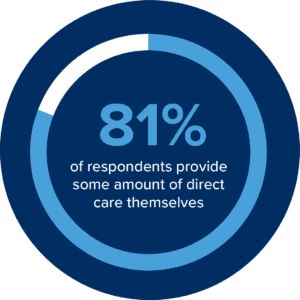
One item that really stands out is just how involved families are when a loved one needs senior care. More than 80% pitch in with direct support, and half of this group said they spend over ten hours a week helping, showing that family care is anything but passive.
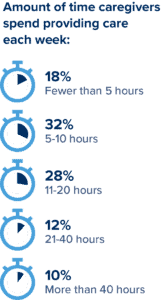
For many Americans, caring for a loved one is more than an ancillary undertaking. Timewise, it can be the equivalent of a part-time or even full-time job; oftentimes one that carries particularly strong emotional weight and stress. When asked for the biggest challenge of caring for an aging family member, balancing caregiving with work or personal lives received the highest share of responses (26%) followed by 23% who said it was emotional stress or burnout. Senior care clearly takes a significant toll and finding a community that offers support, respect and peace of mind is paramount for individuals looking to strike the right balance between staying connected while also navigating all of life’s other responsibilities and demands.
But researching and choosing either supplementary or full-time care support for mom or dad brings about its own stress. What is the right type of community? Do the amenities of the facility matter or is it all about the level of care? Will the community be able to provide long-term care or should I be focused on maximizing quality of life in the immediate future?
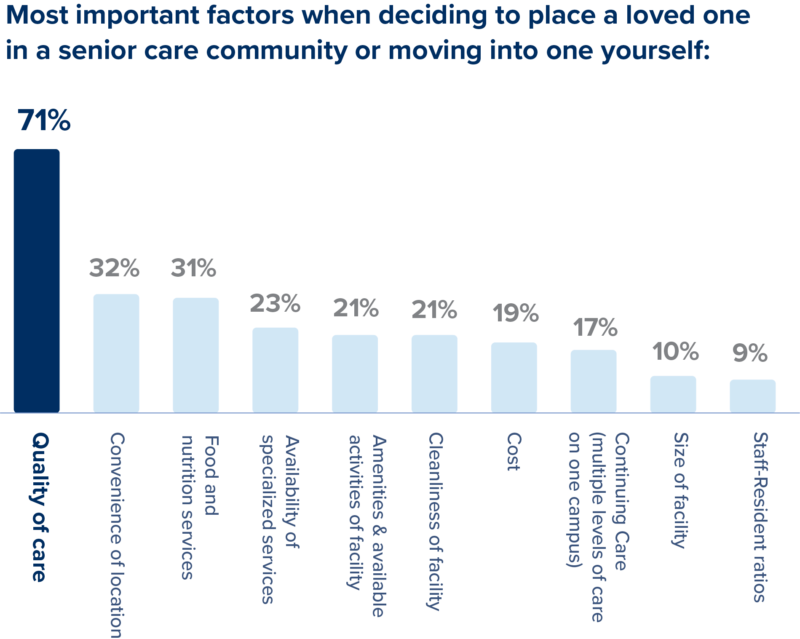
Respondents with a family member in a residential facility were asked what key factors influenced their decision-making process in selecting a community. The chart below shows the overwhelming influence of the quality of care they expect their loved one to receive. Above all, the day-to-day dedication of providing personalized care from staff gives assurance that the correct community was chosen, providing much needed comfort and relief to not only the residents themselves but their loving family members as well.
Beyond quality of care, several influential factors emerge. Convenience of location is important, allowing for frequent visits and the promotion of maintaining strong relationships. Food and nutrition offerings, the availability of specialized services and the general cleanliness of the facility are other important factors that were all cited ahead of cost in terms of elements influencing placement decisions.
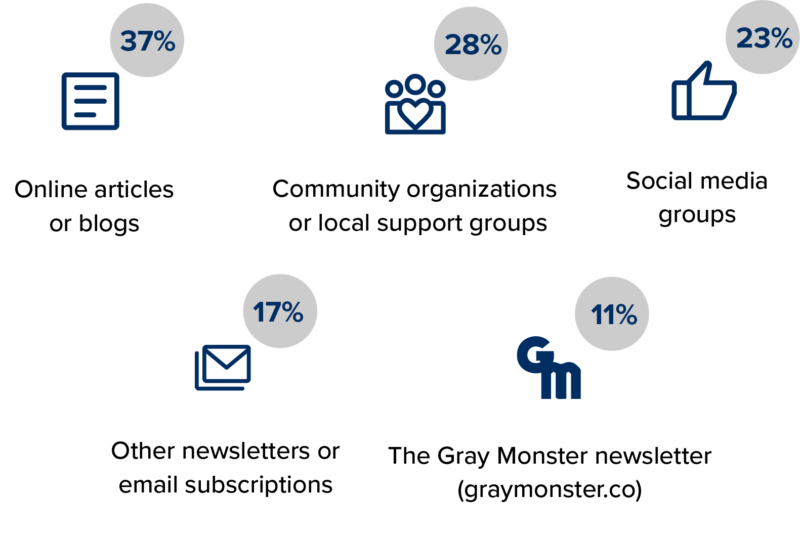
So, if these are the most important aspects of the resident experience and influential factors in determining a senior care facility, where are individuals getting their information to make an informed decision with confidence?
Despite the plentiful resources available these days, good old-fashioned word of mouth recommendations from friends and family is still the most helpful, cited by 60% of survey respondents. This finding crystallizes the practical importance for communities to provide the best possible experience for residents and their families as word-of-mouth endorsements tied to the key priorities of family members can be especially meaningful in shaping decisions. Additionally, it isn’t just first-hand accounts from current residents and families that make an impact. Guidance from healthcare providers and other professionals also play a key role, selected by 54% of respondents. These dynamics make it clear that in this competitive market, which is experiencing surging growth, positive feedback loops created by organizations that excel in the high-impact areas of quality of care, convenience and access to services are best suited for long-term success.
This begs the question, how can organizations be confident they are excelling in the areas critical to their success? And, what specific proof points do they have to share with seniors and their caregivers to demonstrate their commitment to providing satisfying experiences? Finally, what types of feedback are they collecting to ensure they are investing in the areas that matter most. These answers and more can be found in the ACSI measurement system which leverages time-tested data modeling with innovative AI analytics that show current conditions, relative performance against the competition, and how to effectively reach goals through optimized action planning. The Thriving Together program provides the complete picture, integrating employee feedback as well so that leadership can manage the entire organizational ecosystem in real time from a well-informed position.
Here’s the bottom line: more and more American adults are facing a new frontier of big decisions about senior care for their loved ones. Gen Xers and Millennials are stepping in to help their Baby Boomer parents, and for many, senior care communities will be an important part of what make those later years joyful and fulfilling. The communities that stay connected to what families and residents really want and need will succeed because picking the right place is always a heartfelt choice.